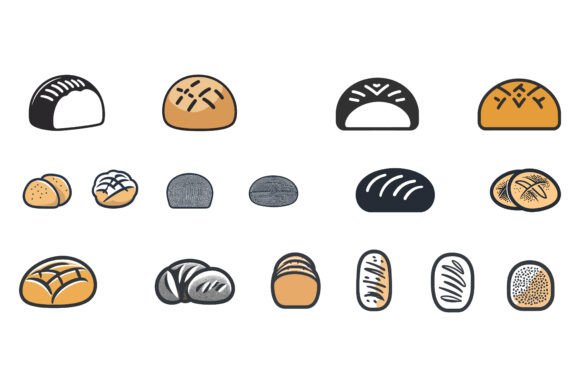
Understanding the Value of a Set of Various Types of Bread Illustrations for Your Design Projects
Finding the right visual assets for a project often takes longer than expected. A well-organized set of various types of bread illustrations can simplify that process considerably, especially when the files arrive structured, editable, and ready for multiple use cases. Whether you are designing a bakery menu, building a recipe app, assembling an infographic series on world cuisines, or refreshing a food blog, the quality and flexibility of your source material directly affects the final output. This article walks through what distinguishes professionally prepared bread illustration sets, how they compare with alternative sources, and when they represent a sound choice versus when a different route may serve you better.
What Defines a Practical Bread Illustration Collection
At first glance, a set of various types of bread illustrations might seem like a straightforward collection of images. But the difference between a thoughtfully assembled design file and a scattered assortment of clip art becomes apparent once you open it. The file structure matters. A neatly organized file with clearly named layers and grouped elements means you spend less time hunting for the right slice of sourdough or the correct baguette silhouette and more time actually designing. When every element sits in its own layer or clearly labeled group, you can isolate, move, or modify individual bread types without disturbing the rest of the composition.
Another practical benefit is format versatility. Receiving both vector files — AI and EPS — and a raster JPG version gives you immediate flexibility. Vector formats scale without quality loss, making them suitable for everything from a small app icon to a large-format printed poster. The JPG provides a quick preview or placeholder when you need to drop something into a presentation or wireframe without launching Illustrator. Designed for both Mac and Windows users, the files eliminate the operating system friction that sometimes causes font substitutions, path distortions, or missing elements when moving between platforms.
Editing Freedom and Color Customization
One of the primary reasons designers look for a set of various types of bread in vector format rather than static images is the ability to edit freely. You can recolor a rye loaf to match a brand palette, adjust line weights for better readability at small sizes, or remove background shapes to create transparent PNG exports for web use. This level of control matters when you need consistency across a series of icons or when the illustration must harmonize with an existing visual identity. The collection includes easily modifiable elements, which means you can change colors and adjust shapes according to your specific requirements without redrawing anything from scratch.
However, editing ease depends on the structural integrity of the original file. A file described as having perfection in details and consistency suggests that each bread type follows the same stylistic logic — consistent stroke widths, similar shading approaches, and proportional relationships that hold up when items are placed side by side. Without that internal consistency, you end up correcting mismatched styles, which defeats the purpose of buying a ready-made set.
Suitability Across Print, Web, and Digital Products
A versatile set of various types of bread should serve print projects such as brochures and posters as comfortably as it serves digital applications like websites, mobile apps, and social media graphics. Vector illustrations maintain crisp edges at any resolution, so a croissant icon looks equally sharp printed six inches wide on a bakery sign and displayed at 32 pixels in a shopping app. The inclusion of JPG files provides a quick-access option for web mockups or email newsletters where vector file handling is unnecessary. For infographics, the ability to pull individual bread illustrations and arrange them alongside text blocks without quality degradation makes the design process smoother and the final result sharper.
Still, it is worth considering your primary output medium before committing. If your work is exclusively digital and you never need print resolution, a set optimized for web use with smaller file sizes might load faster. Conversely, if you regularly produce printed materials, the availability of AI and EPS formats becomes non-negotiable.
How a Dedicated Illustration Set Compares with Alternative Sources
To evaluate whether a set of various types of bread in AI EPS format genuinely fits your workflow, it helps to understand the practical alternatives. Each approach carries distinct tradeoffs in terms of cost, time, customization, and consistency.
Stock Photography of Bread
High-quality stock photographs can look beautiful and authentic. A well-lit photo of crusty artisan bread evokes texture and warmth that flat illustrations rarely match. Photography works well for editorial content, lifestyle blogs, and marketing materials where realism strengthens the message. But stock photos come with limitations. You cannot easily recolor a photograph to match a green-themed brand palette. Isolating a single bread item from a busy photographic background requires editing time and skill. Resizing a photo too far beyond its native resolution introduces blurring, while vector illustrations scale infinitely. Licensing terms also vary, and some stock photo licenses restrict usage in templates or merchandise. A vector illustration set removes those obstacles — you own the editable source files and can adapt them across projects without re-licensing.
Free Icon Sets and Community Resources
Free bread icons and illustrations exist in abundance across design communities and open-source repositories. For a quick, low-budget project, they can be perfectly adequate. The tradeoff typically appears in stylistic consistency, file organization, and detail quality. Free sets frequently mix styles unintentionally, combining hand-drawn elements with geometric shapes in ways that feel haphazard. File structures may lack clear layer naming or grouping, turning a simple color change into a tedious chore. Additionally, free resources sometimes come with attribution requirements or ambiguous usage rights, creating risk for commercial projects. A purpose-built set of various types of bread with clearly communicated licensing terms and a guarantee of organized layers eliminates those uncertainties.
Custom Illustrator Commissions
Hiring an illustrator to create a custom bread set delivers work tailored exactly to your specifications. The advantage lies in complete creative direction — you define the style, color palette, and list of bread varieties. The downside is cost and timeline. A custom illustration series can take days or weeks and cost considerably more than a ready-made collection. For many small businesses, freelancers, and in-house designers working under deadlines, a pre-built set that allows extensive modification occupies a practical middle ground. You get professional quality and editability without the wait or price tag of custom work. The key is whether the stylistic range of the available set aligns closely enough with your vision that minimal adjustment is needed.
Recognizing When a Bread Illustration Set Fits Your Project
Certain project profiles benefit more directly from a set of various types of bread than others. Recognizing where the fit is strongest helps you decide quickly.
Strong Fit Situations
- Menu and signage design — Bakeries, cafés, and restaurants often need consistent visual representations of their product range. Vector bread illustrations can be arranged, labeled, and printed at any size.
- App and web icon systems — Recipe apps, grocery delivery platforms, and food inventory tools rely on recognizable iconography. A uniform style across all bread types keeps the interface visually coherent.
- Infographics and educational materials — Comparing carbohydrate content, grain types, or regional bread varieties becomes clearer when illustrations share a consistent visual language.
- Packaging and branding projects — When launching a product line that includes bread items, having editable vector assets allows for quick mockups and brand color integration.
- Multimedia presentations — Slide decks, training modules, and marketing pitches benefit from clean illustrations that do not break down when projected at large sizes.
When Another Route May Serve Better
There are scenarios where even a well-crafted illustration set may not be the ideal solution. If the project demands hyper-realistic food imagery to stimulate appetite — such as a food photography portfolio or a gourmet restaurant website — stock photography or custom photoshoots remain superior. The emotional response to a photograph of a freshly baked loaf differs fundamentally from the response to an illustrated version. Similarly, if your brand aesthetic leans heavily toward hand-drawn, organic, or highly stylized work that departs from the set's visual style, you may spend more time modifying the illustrations than starting from scratch would require. In those cases, either choose a set whose style already reflects your direction or pursue custom illustration.
Projects with extremely narrow scope — needing only one or two bread icons — might not justify acquiring a full collection. While the per-item cost remains low in a set, the upfront price may feel disproportionate if you genuinely never use the other assets. Consider whether your future projects will revisit bread-related themes often enough to make the collection a long-term resource rather than a single-use purchase.
Practical Factors That Influence Your Decision
Beyond stylistic preferences, several operational factors affect whether a set of various types of bread becomes a genuinely helpful addition to your design toolkit.
Software and Platform Compatibility
The availability of AI and EPS formats along with JPG files signals broad compatibility. Adobe Illustrator remains an industry standard, but many designers work in Affinity Designer, CorelDRAW, Inkscape, or even Figma — all of which handle EPS files to varying degrees. Before purchasing, consider whether your primary design software imports EPS cleanly with intact layer structures. Some applications flatten layers upon import or mishandle certain gradient and transparency effects. Testing with a similar file or checking product descriptions for compatibility notes reduces the risk of unpleasant surprises. The guarantee of functionality for both Mac and Windows users addresses operating system concerns but does not automatically cover every software environment.
Detail Level and Stylistic Consistency
When a product description emphasizes perfection in details and consistency, it indicates attention to uniform line quality, balanced proportions, and cohesive shading. This matters when you display multiple bread illustrations together — a detailed, textured ciabatta next to a flat, simplified pita creates visual dissonance that undermines professional presentation. A consistent set allows you to mix and match items freely without worrying that some will look out of place. Consistency also streamlines editing; when every element follows similar construction principles, learning to modify one bread type teaches you how to modify the rest efficiently.
Long-Term Usability Across Projects
Design resources should ideally serve more than one project. A set of various types of bread holds long-term value if you work regularly in food-related design, produce content about baking or cuisine, or build assets for clients in the food industry. The editability factor extends the lifespan — being able to refresh colors, resize proportions, and adapt styles means the same base illustrations can evolve with changing project demands. Compared to static images that lock you into a single look, vector files function as templates you can revisit and repurpose years later.
Making an Informed Choice Without Overthinking
Experienced designers know that the right tools save time, but no single resource fits every job. The decision to use a set of various types of bread in AI EPS format comes down to a straightforward evaluation: does the set's style align well enough with your project, do the file formats match your software environment, and will the editable, organized nature of the files reduce your production time compared to alternatives?
If the answers lean positive, a well-structured illustration collection can become a frequently accessed part of your asset library. The combination of vector scalability, layer organization for easy editing, and cross-platform compatibility addresses the practical needs of designers who value efficiency alongside creative control. Take stock of your upcoming projects, consider how often bread-related visuals appear in your work, and weigh the convenience of having a ready-to-use, modifiable set against the time and cost of sourcing alternatives for each new project. That balanced assessment leads to a decision you are unlikely to regret.