Understanding Multi-storey Skyscrapers and Their Role in Modern Urban Design
Multi-storey skyscrapers represent some of the most ambitious engineering and architectural achievements in human history. These towering structures, often reaching dozens of floors into the sky, serve as commercial hubs, residential spaces, and iconic landmarks that define city skylines around the world. Whether you are an architect conceptualizing a new high-rise, a graphic designer building visual presentations, or a real estate developer communicating a vision to stakeholders, understanding the fundamentals of multi-storey skyscrapers is essential. The way we visualize and present these complex buildings can make the difference between a compelling proposal and one that falls flat.
At their core, multi-storey skyscrapers are buildings with multiple occupied floors above ground level, typically constructed using steel or reinforced concrete frameworks. They emerged as a solution to limited urban land availability, allowing cities to grow upward rather than outward. Today, they are not just functional spaces but also expressions of cultural identity, economic power, and sustainable innovation. From the early Chicago School designs to contemporary supertall structures in Asia and the Middle East, the evolution of multi-storey skyscrapers reflects advances in engineering, materials science, and design philosophy.
The Challenges of Presenting Multi-storey Skyscraper Concepts
When professionals work with multi-storey skyscraper projects, they frequently encounter a set of common challenges. One of the most persistent is the need to communicate complex architectural ideas clearly and persuasively. A multi-storey skyscraper is not simply a tall box; it involves intricate floor plans, structural systems, facade treatments, and contextual relationships with surrounding buildings. Trying to convey all of this through words alone rarely succeeds. Visual representation becomes not just helpful but necessary.
Another challenge lies in consistency across different presentation formats. A design team may need to produce materials for print brochures, digital presentations, website graphics, and mobile applications. Each medium has different resolution requirements, color profiles, and dimensional constraints. Maintaining a cohesive visual identity across all these channels can be time-consuming and technically demanding. Additionally, many teams work under tight deadlines where creating detailed illustrations from scratch is simply not feasible.
There is also the matter of editability. Stakeholders often request changes late in the process—perhaps adjusting the color palette of the facade, modifying the landscaping around the base of the tower, or altering the proportions of certain elements. If your visual assets are locked into a rigid format, even minor revisions can become major undertakings. This is where having flexible, well-organized source files becomes invaluable.
How Professional Illustration Collections Address These Needs
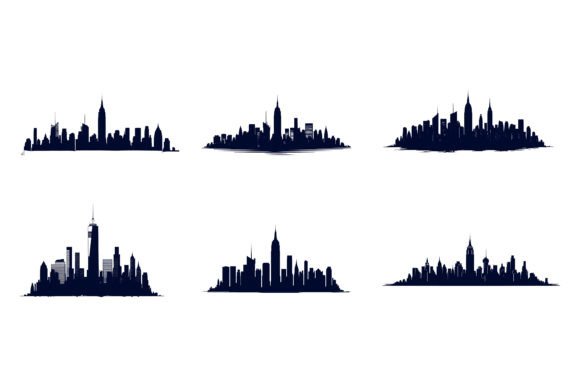
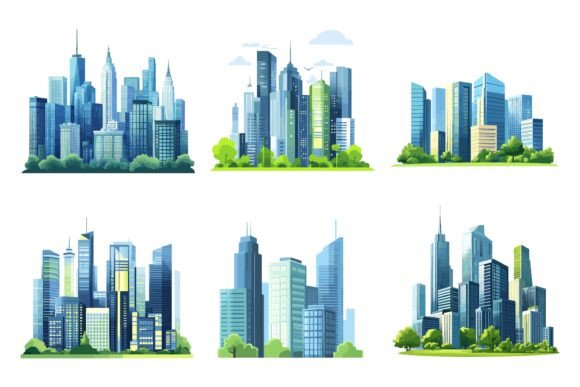
High-quality illustration sets designed specifically for multi-storey skyscraper projects can bridge the gap between conceptual vision and polished presentation. When you have access to a thoughtfully crafted collection, you gain more than just images—you acquire a foundation that you can adapt, customize, and build upon. The right set includes vector-based AI and EPS formats alongside high-resolution JPG previews, giving you versatility across different software environments and use cases.
What makes certain illustration collections stand out is their organization. Neatly structured files with clearly named layers allow you to isolate individual components of a skyscraper illustration—windows, structural frames, entrance canopies, rooftop elements—and modify them independently. This level of control means you can change colors, adjust proportions, or combine elements from different illustrations without starting from scratch. For Mac and Windows users alike, compatibility is built into the core file formats, removing friction from cross-platform workflows.
Attention to detail and consistency across an illustration set ensures that when you place multiple assets side by side, they look like they belong to the same visual family. This is particularly important for multi-storey skyscraper presentations where you might show a building from different angles, at different times of day, or in different urban contexts. Perfection in the small details—the way light reflects off glass curtain walls, the rhythm of floor plates, the integration of vertical transportation cores—elevates the overall impression of professionalism.
Practical Applications Across Different Professions
Architects and urban planners use multi-storey skyscraper illustrations for site analysis diagrams, massing studies, and client presentations. Being able to quickly populate a streetscape with realistic towers helps convey scale and density without requiring a fully realized 3D model. The illustrations serve as efficient communication tools during the early stages of design when ideas are still fluid and rapid iteration is valuable.
Graphic designers and marketing professionals find these assets useful for creating brochures, websites, and social media content for real estate developments. A sleek, professionally rendered skyscraper illustration can anchor a landing page or serve as the hero image for a property listing. Because the source files are editable, the designer can align colors with brand guidelines, add custom signage, or incorporate the illustration into a larger composition with text and other graphical elements.
App developers and UI designers working on smart city platforms, navigation tools, or property management software also benefit from clean, scalable skyscraper icons and illustrations. Vector formats ensure that graphics remain crisp at any size, from tiny map markers to full-screen background images. Infographic designers, meanwhile, can use these assets to create compelling data visualizations about urban growth, energy consumption in tall buildings, or comparative skyline analyses.
Customization and Flexibility in Real-world Projects
One of the most valuable aspects of a well-designed illustration set is how easily you can edit and modify the content. Suppose you are working on a proposal for a mixed-use multi-storey skyscraper that includes retail at ground level, offices in the middle floors, and residential units above. You might start with a base illustration that captures the general massing and then adapt it to reflect the specific program mix. You can change the color of the commercial podium, adjust the pattern of the residential balconies, or add green roof elements to highlight sustainability features.
This adaptability extends to different stylistic treatments as well. A single illustration might be used in a minimalist line-art style for an architectural diagram, then recolored with gradients and shadows for a marketing brochure, and finally simplified into a flat icon for a mobile app. Having access to the original vector files makes these transformations possible without loss of quality. The ability to modify icons and illustrations to suit your needs also means you can maintain visual consistency across an entire project ecosystem, reinforcing brand identity and professional credibility.
Considerations for Selecting the Right Illustration Resources
When choosing an illustration collection for multi-storey skyscraper projects, several factors deserve careful consideration. First, assess the range of building types and styles included. A diverse set that covers commercial towers, residential high-rises, mixed-use developments, and landmark structures gives you more creative flexibility than a narrow assortment. Second, examine the level of detail in the illustrations. Too little detail can make buildings look generic and unconvincing, while excessive intricacy may limit adaptability. The sweet spot is a balance where the illustrations are recognizable and characterful without being so specific that they resist customization.
File organization matters more than many people initially realize. Opening a folder of assets to find everything clearly labeled, logically grouped, and free of clutter saves significant time during fast-paced projects. Layer structure within individual files is equally important. If you can easily toggle visibility for different components, lock background elements while editing foreground details, and apply global color changes through well-named swatches, your workflow becomes substantially smoother.
Compatibility across operating systems and software versions ensures that team members can collaborate without technical barriers. AI and EPS formats are industry standards supported by Adobe Illustrator, CorelDRAW, Affinity Designer, and many other applications on both Mac and Windows platforms. The inclusion of JPG previews allows for quick browsing and placement in early drafts without needing to open vector editing software every time.
Integrating Illustrations into Your Design Workflow
To get the most out of a multi-storey skyscraper illustration set, think about how the assets fit into your broader design process. Start by reviewing the entire collection to understand what is available and where gaps might exist that require custom work. Import the most relevant illustrations into your working document and begin experimenting with color schemes that match your project's identity. Create variants for different contexts—perhaps a daytime version for the main presentation and a nighttime version with illuminated windows for the dramatic closing slide.
Consider building a template library that pairs your favorite illustrations with commonly used layouts and typography. Over time, this library becomes a reusable resource that accelerates project kickoffs and ensures consistency across deliverables. When collaborating with team members, share not just the final exports but also the organized source files so that others can learn from your approach and maintain the same standards on their own work.
The versatility of these illustrations extends to print and digital environments alike. For print, ensure that your export settings match the required resolution and color space, typically 300 DPI in CMYK for high-quality brochures and large-format boards. For digital use, RGB color mode and appropriate pixel dimensions for web, social media, or app interfaces will produce the best results. Because the source vectors remain resolution-independent, you can generate outputs for any medium without degradation.
Real-world Outcomes and Long-term Value
Professionals who invest in quality illustration resources for multi-storey skyscraper projects often report tangible improvements in their workflow efficiency and presentation quality. Time saved on creating base illustrations from scratch can be redirected toward refining design concepts, engaging with clients, or exploring creative variations. The polished, consistent look of professionally crafted illustrations also tends to inspire greater confidence among stakeholders, which can influence approval processes and funding decisions.
Beyond immediate project needs, a well-chosen illustration collection grows in value over time. As you complete multiple projects, you accumulate customizations, adaptations, and templates that make each subsequent effort faster and more refined. The initial investment pays ongoing dividends through reduced production time and elevated creative output. For studios, agencies, and independent professionals working in architecture, real estate, urban planning, and related fields, this represents a meaningful competitive advantage.
Whether you are preparing a major pitch for a new downtown tower, designing an interactive map for a smart city initiative, or creating educational materials about urban development, the right visual assets make your message clearer and more compelling. Multi-storey skyscrapers are inherently dramatic subjects—tall, aspirational, and structurally fascinating. Capturing that drama in your presentations and products helps you connect with audiences and communicate your vision effectively.
The combination of editable vector formats, cross-platform compatibility, organized file structures, and meticulous attention to detail creates a foundation that supports creative exploration rather than limiting it. When you can quickly change colors, modify icons, and adapt illustrations to fit your specific needs, you gain the freedom to focus on the bigger picture while trusting that the visual details will hold up under scrutiny. That confidence translates into better work, smoother collaborations, and more successful outcomes across every type of multi-storey skyscraper project you undertake.