Happy Family Vector Illustrations: A Complete Creative Asset Collection
Every designer, marketer, and small business owner eventually reaches a point where stock imagery falls short. Generic photos or overly stylized clip art rarely align with a project’s tone or a brand’s identity. The Happy Family AI EPS illustration set steps directly into that gap. It delivers a cohesive series of family-themed vector scenes and icons that you can drop into presentations, websites, print collateral, and apps without hours of search time or expensive custom commissions. The real advantage sits in how the files are structured, how consistently the artwork is crafted, and how easily you can reshape them for specific needs.
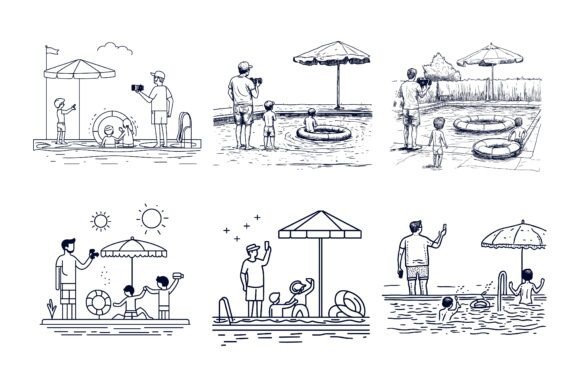
This isn’t a random bundle of loosely related graphics. The collection is built around one theme—family—interpreted through clean, modern vector shapes. The moments depicted feel natural rather than staged: a parent reading with a child, a multigenerational gathering, a family shopping, a cozy weekend cooking scene, and many more. Each illustration works as a standalone asset or as part of a broader visual story. For anyone who regularly produces content around parenting, education, healthcare, community services, or lifestyle brands, having a ready-made set of relatable, professional illustrations saves enormous time while keeping quality high.
What Makes the Happy Family Collection Practical for Daily Design Work
Before unpacking how to use these files inside a project, it helps to understand what actually comes in the package. The main formats are AI (Adobe Illustrator), EPS (Encapsulated PostScript), and high-resolution JPG previews. The vector formats ensure scalability to any size without pixelation, while the JPG files give you a quick way to browse or place a version without opening a vector editor. The collection is designed for both Mac and Windows users, removing one of the first friction points for teams working across operating systems.
Inside the main folder, everything follows a clear, logical structure. Rather than dumping all files into a single directory, the designer organized them by scene or category. Each illustration also maintains a clean layer stack: backgrounds are separated from characters, and individual family members or objects sit on their own sub-layers. That means you can isolate a single character, change a pose, replace an element, or hide parts of a scene without rebuilding anything from scratch. For professionals who frequently repurpose assets, this level of organization cuts revision time from hours to minutes.
Visual consistency across a large illustration set is difficult to achieve, but this collection holds a unified line weight, consistent stroke style, and a harmonized color palette. When you place multiple illustrations from the same set on a webpage or in a brochure, they feel like they belong together. That kind of cohesion elevates the look of any project—no more piecemeal graphics that clash with each other or your own brand colors.
Integrating Happy Family Illustrations into Your Project Workflow
These illustrations can enter a workflow at several stages. During planning, you might drop the JPG previews into a mood board, a rough wireframe, or a slide deck outline. They give stakeholders a visual anchor before you commit to final designs. Because the scenes are thematically consistent, even rough comps look polished, which helps when presenting early-stage ideas to clients or team leads.
During active design production, you import the AI or EPS files directly into Adobe Illustrator, Affinity Designer, or other vector-compatible software. The layered structure makes it simple to pull out individual elements. Need a parent and child duo for a blog header? Open the scene, duplicate the needed layers, and drop them into your layout. Because each asset is fully editable, you can recolor clothing, adjust skin tones, or even modify expressions to match your audience. This transforms a pre-made illustration into a custom asset without the cost of a dedicated illustrator.
After a project ships, the collection keeps paying back. You might launch a campaign with one illustration, then a few months later create a social media post using a different scene from the same set. The visual language remains continuous. For fast-moving teams—think agencies, in-house marketing groups, or freelance solopreneurs—this built-in continuity reduces the time spent hunting for matching assets every time a new deliverable pops up.
The files also play well with non-Adobe tools. You can open EPS files in CorelDRAW or Inkscape. JPGs import into Canva, PowerPoint, Google Slides, or Figma in seconds. Even if your daily driver isn’t Illustrator, you can still use the high-resolution raster copies for most digital and print tasks. The cross-tool flexibility means the collection serves not just designers, but also marketing coordinators, content creators, virtual assistants, and business owners who assemble their own materials.
Using the AI EPS Format for Maximum Flexibility
The real power comes from the vector originals. Vector illustrations let you resize a graphic from a tiny mobile icon to a large-format banner without any quality loss. When you open an AI or EPS file, you can select any shape and adjust its fill color, stroke weight, or gradient with a few clicks. For instance, if your brand uses a specific teal and coral palette, you can swap the default colors in minutes. The edits remain clean because the original construction uses closed paths and well-named groups, not messy auto-traced junk.
Modifying an illustration often intimidates people who aren’t full-time illustrators. But this collection simplifies that process. The layer names are descriptive: “mother,” “father,” “child,” “background,” “props.” You don’t need to guess what a shape does. If you want to reposition a character, you unlock that layer and drag it. To remove an element, you toggle visibility. These small, predictable interactions lower the barrier so that even someone with basic vector editing skills can quickly tailor an illustration to fit a specific brochure or landing page.
For designers who work with motion graphics or infographics, vector files can also be brought into After Effects, Premiere Pro, or even animation tools like Rive. Because the files are already flat, structured vectors, they translate smoothly to animation paths. This opens up possibilities for explainer videos, social media animations, and interactive data stories—all without re-illustrating anything.
Real-World Use Cases for the Happy Family Illustrations
A set like this touches dozens of everyday tasks for different roles. Here are a few concrete examples of how it integrates into actual work:
- Bloggers and content creators: Family lifestyle blogs need warm, relatable imagery. Instead of stock photos that look staged, a vector illustration of a family meal or a bedtime story feels more approachable and matches a friendly tone. Insert the JPG into your CMS, or edit the AI file to match your site’s accent colors for a custom header.
- App and UI designers: Onboarding screens, tutorial cards, or empty states can feel cold without human illustration. A parent teaching a child to tie shoelaces or a family cooking together works beautifully as a background illustration for a task management or education app. Because you scale vectors, the same graphic can appear on both a phone and a tablet layout without re-exporting.
- Print marketers: Create flyers for community centers, pediatric clinics, or parenting workshops. The files output at 300 DPI or higher, and because they are vector, they’ll separate cleanly for professional printing. The organized layers let you isolate elements for spot-color adjustments if needed.
- Infographic specialists: Family statistics—childcare costs, demographic trends, parenting time allocation—come alive with relevant icons. Pull individual family members from different scenes to build simple character sets. Then place them alongside data in your infographic tool. The consistent style unifies the entire visual.
- E-learning developers: Courses about child development, family health, or parenting skills often need scenario-based imagery. An editable illustration lets you change a family’s appearance to reflect your learner demographic, which improves relatability and learning outcomes.
Organizing and Managing the Illustration Files
How you store and access the Happy Family collection within your broader asset library matters. Create a dedicated folder inside your design resources directory called “Happy Family.” Inside, keep the original AI and EPS files untouched as your master copy. Then create a secondary folder for your modified versions. This protects the original constructions from accidental overwrites while giving you the freedom to build a library of pre-colored, brand-aligned variations.
If you work within a team, consider hosting the JPG previews in a cloud folder like Dropbox or Google Drive, and use descriptive file names that align with the scene: for example, “Family_cooking_meal.jpg.” When someone needs an image quickly, they can browse previews without opening vector software. The vector originals can stay in a shared drive accessible only to the design team.
Tagging assets in a digital asset manager (DAM) or a tool like Eagle or Adobe Bridge helps later searchability. Add tags like “parenting,” “multi-generational,” “home,” “meal,” “reading,” and “outdoors” to find the right illustration during a tight deadline. The upfront time spent organizing pays off every time a project requires a family-oriented image.
Quality Control and Long-Term Value
The phrase “perfection in details and consistency” isn’t fluff for this collection. Every curve, every intersection of shapes, and every filled area shows purposeful construction. Hair strands aren’t a tangle of overlapping paths; eyes and facial expressions use minimal lines for maximum expression. This clean construction means the files won’t suddenly break when you scale them up to billboard size or when you export them for a high-resolution print piece.
For businesses that produce content on a regular schedule—newsletters, social media posts, blog graphics—having a go-to illustration set directly reduces decision fatigue. Instead of scrolling through stock sites and trying to cobble together a coherent visual series, you pick a scene that fits today’s topic and tweak the colors. That consistency carries over months of content, building a recognizable visual brand without extra effort.
Long-term, these vectors remain valuable because they aren’t tied to a specific trend that will fade in six months. The family theme is evergreen. Whether you’re creating a one-off brochure or building a year-long campaign, the same illustrations adapt. As your skills grow, you might even start combining scenes, creating custom hybrids for special campaigns. The layered structure means you can merge characters from two different illustrations into a new composition, essentially extending the set further.
Tips for Adapting the Illustrations to Your Brand
Changing colors is the fastest way to make a pre-made illustration feel like a bespoke asset. Open an AI file, select the skin tone swatch, and adjust it to match your preferred palette. Do the same for clothing, hair, and background elements. Save the adjusted file as a new version. If you use multiple illustrations from the collection across a single project, apply the same color modifications to all of them for consistency.
For non-vector editors who need quick edits, you can open the JPG in an online editor like Photopea or Canva, use the color replacement tool, and replace specific hues. While this isn’t as precise as vector editing, it works for simple color shifts. Another approach: overlay a semi-transparent color block in your design tool to tint the illustration. This works well for backgrounds where you want a monochromatic look.
When combining the Happy Family illustrations with other graphic elements—icons, data visualizations, text—pay attention to line thickness and visual weight. If your other icons are thin-line style, you can reduce the stroke weight of the illustration elements slightly to match. This small adjustment prevents the illustrations from overpowering the rest of the layout.
Quick Start Guide for First-Time Users
- Download and unzip the collection. Locate the JPG preview folder and scan through the scenes to pick one that suits your project.
- Open the corresponding AI or EPS file in your vector editor. Leave the original untouched; instantly save a copy into your project folder.
- Inspect the Layers panel. Click through the named layers to understand which parts you can move or hide. Hide any unnecessary elements for a cleaner composition.
- Choose a color palette. Use your brand’s hex codes or a pre-chosen set of hues. Replace the fill colors of key objects. Test how the illustration looks on a white background and on a colored card to ensure contrast.
- Export the final asset in the format you need: SVG or PNG for web, PDF or EPS for print, or high-res JPG for a presentation slide.
- Save your customized version into a personal library so you don’t have to repeat the same edits next time.
Many people underestimate how much smoother a project runs when the visual assets already contain this level of preparation. You move from “Where do I find a suitable family graphic?” straight to “Which of these scenes best supports my message, and how can I personalize it in five minutes?” That shift in momentum is what turns a good illustration pack into an actual workflow improvement.
The Happy Family collection earns its place in a creative toolkit not just because of the artwork itself, but because of how intentionally the files are built, how easily they plug into different software, and how consistently they perform across print and screen. From the planning stage of a marketing campaign to the final revision of an app screen, the illustrations support faster decision-making and more unified outcomes. When you need family-themed visuals that won’t fight your brand or your timeline, having this set readily available makes the next project simply easier. So what are you waiting for? Buy now and start using this awesome illustration.