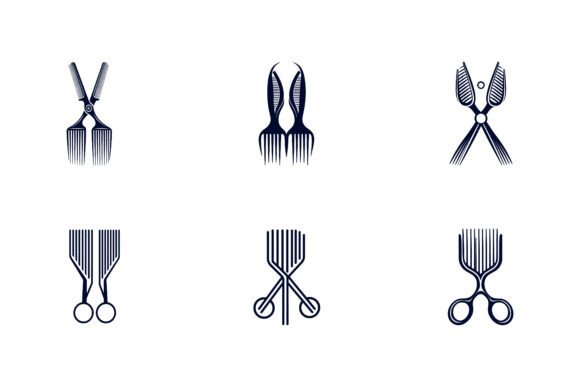
Hair Comb Illustrations and the Thoughtful Design Behind Every Detail
Every designer knows the moment. You are searching for that one visual element that feels effortless yet precise—a hair comb illustration that captures texture, line weight, and personality without overwhelming the composition. It sounds simple. A comb. An everyday object. But anyone who has scrolled through hundreds of generic vectors understands that simplicity, when executed poorly, feels hollow. When executed with care, it becomes indispensable.
The Hair Comb has quietly become a recurring motif across branding, editorial layouts, beauty packaging, and digital product interfaces. It represents grooming, self-care, heritage craftsmanship, and even nostalgia. Its visual language—teeth spacing, handle curves, material sheen—can shift meaning entirely depending on how an illustrator renders it. A minimalist line-art comb speaks to modern Scandinavian aesthetics. A richly detailed vintage comb evokes art deco elegance. The object itself remains the same. The interpretation changes everything.
Hello Welcome to Our Special AI EPS Collections and What They Represent for Today's Creators
Illustration sets have flooded the market in recent years. Subscription platforms promise unlimited downloads. Free repositories offer quick fixes. But experienced designers and business owners have learned that volume does not equal value. What separates a genuinely useful collection from digital clutter often comes down to the foundational decisions made during its creation.
When you encounter a collection that opens with "Hello Welcome to our Special AI EPS Collections," the introduction itself signals intent. This is not a hastily exported batch of auto-traced images. It is a curated set built around a theme—in this case, the hair comb and its stylistic possibilities—designed for professionals who need assets that integrate smoothly into real projects. The greeting reflects a relationship between creator and user that mass-market platforms rarely acknowledge.
What Makes These AI EPS Illustration Set Special for You
Designers evaluating any illustration pack eventually ask the same practical question: will this actually save me time, or will I spend hours fixing what should have worked from the start? The answer often lies in the format and structure. An AI EPS illustration set that includes native vector files alongside accessible JPG previews respects the reality of multi-stage workflows. You might need the editable vector for final production and a quick raster version for client presentations or social media drafts. Having both removes friction.
What makes these AI EPS illustration set special for You extends beyond file formats. It touches on the quiet craftsmanship of layer organization. Anyone who has opened a vector file only to find hundreds of unnamed, ungrouped paths understands the sinking feeling. A neatly organized file structure—with meaningful layer names, logical grouping, and clean construction—transforms an illustration from a static asset into a flexible component. You can isolate elements, apply changes, or extract individual pieces without hunting through a digital haystack.
File Integrity Across Platforms and the Mac/Windows Reality
The creative industry has long navigated the subtle tensions between operating systems. Design teams are rarely homogeneous. A freelancer might work on a Mac while their client runs Windows. An agency might have both environments across different departments. When an illustration collection is designed for Mac and Windows users from the outset, it reflects an awareness of real-world collaboration. Font outlines render correctly. File paths behave. Color profiles remain consistent.
This cross-platform consideration has grown more important as remote work and distributed teams become standard. An asset that requires troubleshooting on one system creates delays that compound across project timelines. The reassurance that files open cleanly regardless of environment is not a minor feature—it is a quiet form of professional reliability.
Neatly Organized File and Layer Structure as a Creative Enabler
There is a particular freedom that comes with opening a vector illustration and immediately understanding how it was built. Neatly organized file and layer structure does more than satisfy a sense of order. It invites modification. When layers carry descriptive names and elements sit in predictable hierarchies, the designer can confidently experiment. Want to remove the decorative etching from a comb handle? Find the layer, toggle visibility, move on. Need to adjust stroke weights across an entire set? Grouped elements make global edits possible in seconds.
This organizational discipline reflects an illustrator who designed the file for others to use—not just for personal output. It is a form of professional generosity that experienced designers recognize and appreciate immediately. You spend less time reverse-engineering someone else's construction logic and more time making the illustration serve your specific composition.
Perfection in Details and Consistency Across Every Illustration
Illustration sets live or die by their internal coherence. One beautifully rendered comb illustration loses its value if the companion pieces in the same pack vary in line weight, stylistic approach, or level of detail. Perfection in details and consistency becomes the invisible thread holding a collection together. When every illustration in a hair comb set shares the same design language—consistent corner radii, harmonious proportions, unified stroke styling—the designer using them can mix and match without visual dissonance.
This consistency also matters for brand applications. A beauty brand commissioning packaging illustrations needs the confidence that every comb icon across product lines will feel like part of the same family. Inconsistency erodes visual trust. Small details—the taper of a tooth, the shadow treatment on a handle, the transition between flat and curved surfaces—accumulate into an impression of quality or its absence.
Suitable for Print, Web, Symbols, Apps, and Infographics
The modern creative professional rarely works in a single medium. A morning might involve designing a printed catalog. The afternoon shifts to app interface icons. Evening brings a client request for an infographic. An illustration set that declares itself suitable for print, web, symbols, apps, and infographics promises versatility, but delivering on that promise requires technical rigor.
For print, the vector files must scale cleanly to billboard dimensions without degradation. For web and apps, export workflows need to produce crisp pixels at multiple resolutions. For symbols and infographics, the illustrations should remain legible at small sizes—a hair comb icon reduced to 24 pixels still needs to read as a comb, not an ambiguous shape. The AI EPS format inherently supports this scalability, but only when the original artwork was constructed with these diverse outputs in mind.
Editability and Creative Control Over Colors and Forms
Perhaps the most practical consideration for any illustration buyer is the freedom to adapt. You can edit it, change colors and modify the icon so easily according to your needs. This is not merely a convenience; it determines whether an asset becomes a long-term resource or a one-time purchase. Brand color palettes vary. Project requirements shift. Seasonal campaigns demand different visual tones. An illustration locked into its original colors has limited shelf life. One that welcomes modification becomes a reusable asset across months and years of work.
Vector editing software—Illustrator, Affinity Designer, CorelDRAW—gives designers the technical capability to recolor, reshape, and recombine elements. The question is whether the source file supports or resists such edits. Well-constructed files with unflattened shapes, organized gradients, and editable strokes lower the barrier to customization. A designer can match brand colors in moments, adjust stroke thickness for different contexts, or extract individual comb elements to create entirely new compositions.
How Hair Comb Illustrations Fit Into Evolving Design Practices
The hair comb as a visual subject has gained understated traction in recent years. Beauty and personal care brands have shifted toward more refined, less literal packaging design. Editorial publications exploring themes of identity, ritual, and domestic life have embraced everyday objects as narrative anchors. App designers building habit-tracking or wellness products often reach for grooming metaphors—combs, brushes, mirrors—to signal self-care routines.
This is not a trend driven by novelty but by the search for visual clarity. Abstract symbols can feel disconnected from daily experience. A comb is immediate, recognizable, and carries cultural resonance across geographies. Its silhouette varies enough across styles—wide-tooth, fine-tooth, folding, decorative—to offer illustrators genuine range without losing the object's core identity.
Real-World Applications and Practical Observations
Consider a small skincare brand preparing its first product line. The founder needs packaging illustrations, social media graphics, and website icons—all within a tight budget and timeline. Purchasing a well-structured hair comb illustration set provides a cohesive visual language immediately. The editable vectors allow color matching to the brand's palette. The organized layers let the founder's designer isolate elements for different package sizes. What could have been a weeks-long custom illustration project becomes a manageable in-house task.
An educator building course materials on personal hygiene or historical grooming practices might use comb illustrations to add visual interest to slides and handouts. The ability to modify colors helps maintain accessibility standards—adjusting contrast for readability without sacrificing aesthetic quality.
A blogger writing about vintage craftsmanship or sustainable materials can incorporate comb illustrations as decorative elements that support the content without distracting from it. The JPG files provide ready-to-use web graphics, while the AI EPS originals remain available for future projects requiring higher fidelity.
The Shifting Expectations Around Digital Assets
Professionals who have worked with stock resources over the past decade have watched the market evolve. The early promise of unlimited subscription libraries has been tempered by the reality of quality inconsistency. Time spent filtering mediocre results often erases the apparent savings. In response, discerning creators have grown more selective. They scrutinize preview images more carefully. They read about file structure, format compatibility, and the creator's attention to organizational detail before committing.
This shift benefits both thoughtful illustrators and serious buyers. Illustrators who invest in clean construction and versatile exports can differentiate their work from mass-produced alternatives. Buyers who prioritize editability and cross-platform reliability find assets that genuinely accelerate their workflows rather than adding hidden labor. So what are you waiting becomes less a marketing prompt and more a genuine question when the value proposition aligns with actual needs.
Making the Most of AI EPS Illustration Resources
Getting full value from an illustration collection requires more than downloading files. Smart professionals build small systems around their asset libraries. They maintain organized folders with clear naming conventions. They create template files where frequently used illustrations sit ready for quick access. They document color replacement workflows so that new team members can adapt assets without confusion.
When the source files are already neatly structured, these habits become easier to establish. A well-organized AI EPS file practically teaches you how to use it. The layer names suggest the illustrator's construction logic. The grouping patterns reveal which elements were designed to work together. Over time, using well-built illustration sets raises your own standards for file organization and output quality.
The hair comb, as humble as the object seems, becomes a small case study in how thoughtful design assets support meaningful creative work. It is not about the comb itself. It is about everything the comb represents when rendered with skill, organized with care, and delivered in formats that respect how professionals actually work.