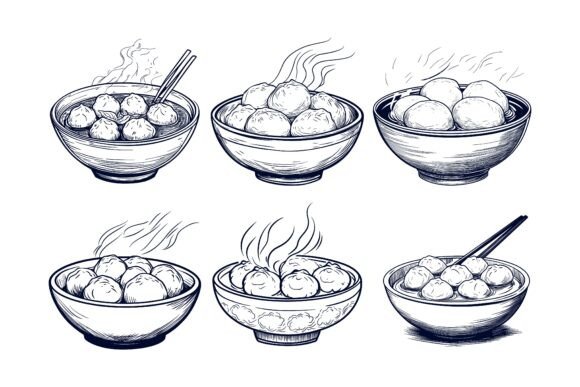
Traditional Ramen Noodle Soup: From Bowl to Beautiful Art
A steaming bowl of traditional ramen noodle soup tells a story before the first spoonful reaches your lips. The amber broth, the precisely arranged toppings, the perfectly coiled noodles — every element carries intention. This same visual storytelling matters enormously when you bring food imagery into digital projects, branding efforts, or print materials. Whether you run a restaurant, design menus, publish food content, or build culinary apps, having authentic and adaptable visuals of traditional ramen noodle soup changes how your audience connects with your work.
Food imagery sits at the intersection of appetite and art. Traditional ramen noodle soup, with its layers of texture and color, presents a unique challenge for illustrators and designers. Getting the sheen of the broth right, the curl of the noodles, the contrast of green scallions against rich stock — these details separate generic clip art from work that genuinely communicates warmth and craftsmanship. For professionals who refuse to settle, having editable vector illustrations on hand means you control every visual nuance.
Why Traditional Ramen Noodle Soup Imagery Resonates Across Industries
Ramen carries cultural weight that extends well beyond Japanese cuisine. It represents comfort, craft, and authenticity — qualities that brands across food, lifestyle, and hospitality sectors eagerly associate with. When you incorporate traditional ramen noodle soup visuals into your project, you tap into that emotional recognition. Restaurant owners use these illustrations for menu boards that feel both approachable and refined. Food bloggers embed them in recipe posts to give readers an immediate sense of what awaits. App developers rely on clean ramen icons to make navigation intuitive within cooking or delivery platforms.
What surprises many creators is how versatile a single ramen illustration becomes when you can modify it freely. A vector of traditional ramen noodle soup might appear on a printed flyer one day and serve as a social media icon the next, scaled without losing fidelity. This flexibility matters when you operate across multiple channels and need consistent visual language.
What Makes a Premium AI EPS Illustration Collection Stand Out
Not all illustration sets deliver equal value. The difference emerges in how the files are constructed, organized, and prepared for real-world workflows. A thoughtfully built collection of traditional ramen noodle soup illustrations provides more than pretty pictures — it offers practical assets that slot into your existing process without friction.
Organized File and Layer Structure Saves Real Time
Opening a vector file to find every element scattered across unnamed layers wastes minutes you could spend designing. When you work with neatly organized files where each ingredient, bowl element, and garnish sits on its own clearly labeled layer, you isolate what you need in seconds. Want to adjust only the broth color for a miso variation? Select the labeled layer and make your change. Need to reposition the egg without disturbing the noodles? A structured file makes this effortless. For traditional ramen noodle soup illustrations, proper organization means separating the chopsticks, bowl, broth, toppings, steam wisps, and background into distinct editable components.
Cross-Platform Compatibility from the Start
Designers span operating systems, and files that work smoothly on both Mac and Windows eliminate a common friction point. A reliable traditional ramen noodle soup illustration package includes AI EPS formats alongside JPG previews, ensuring you can drop assets into Adobe Illustrator, Affinity Designer, or other vector-compatible software regardless of your setup. The JPG previews also give you quick reference images for sharing concepts with clients or team members who may not have vector editing tools.
Attention to Detail That Communicates Quality
Perfection in details and consistency across a set separates professional illustrations from amateur attempts. With traditional ramen noodle soup, convincing details include the subtle gradient in the broth, the texture of nori sheets, the glossy highlight on a soft-boiled egg, and the varied curl patterns of wheat noodles. When every element within the collection maintains this standard, your finished project inherits that quality.
Practical Applications Across Different Environments
The reach of well-designed ramen illustrations extends into more contexts than you might expect. Here are several real-world scenarios where traditional ramen noodle soup artwork proves genuinely useful:
- Print materials — menus, flyers, posters, and loyalty cards for ramen shops and Asian-fusion restaurants benefit from illustrations that reproduce cleanly at various sizes without pixelation.
- Web design — hero images, blog featured graphics, and category headers on food websites gain personality and color through custom ramen artwork.
- Symbols and icons — simplified ramen bowl icons serve as navigation elements in food delivery interfaces, cooking timer apps, and restaurant directory platforms.
- Apps and infographics — instructional cooking apps use step-by-step ramen illustrations to guide users through recipes, while infographics about food culture employ ramen visuals to anchor data points.
- Branding and packaging — instant ramen brands, subscription meal kits, and specialty food products incorporate vector ramen art into labels, boxes, and promotional materials.
- Educational content — culinary schools and online cooking courses illustrate techniques with clear, detailed ramen imagery that students can study closely.
How Easy Editing Expands Creative Control
One of the strongest arguments for choosing editable vector illustrations over static images involves the freedom to adapt. With traditional ramen noodle soup vectors, you can change colors to match brand palettes, modify the icon style to fit existing design systems, and adjust line weights for different output requirements. A single ramen illustration might serve as a bold, flat-color app icon one week and transform into a detailed, shaded menu graphic the next — all from the same source file.
This adaptability proves especially valuable for marketing teams running seasonal promotions. A winter campaign might warm the broth tones toward deeper amber and add steam for coziness. A summer promotion could brighten the toppings and introduce fresh herb elements. Because the base illustration permits easy modification, you avoid commissioning new artwork for each variation.
Selecting and Using the Right Illustration Set
When evaluating a traditional ramen noodle soup illustration collection, several factors deserve attention beyond the preview images. Examine whether the files include both AI EPS and JPG formats, since vector source files give you editing power while raster previews speed up browsing and client presentations. Check compatibility notes to confirm the files work on your operating system — reliable sets support both Mac and Windows users without conversion issues.
Look at the layer structure if sample files are available. Organized, named layers signal that the illustrator considered how designers actually work. Inconsistent or flattened layers limit what you can reasonably modify. Also assess whether the illustration style remains consistent across all included assets, because mixing styles within a single project undermines visual cohesion.
Consider your primary use cases before committing. If you mostly produce print materials, verify that the illustrations scale well to poster dimensions without losing sharpness. If digital output dominates your workflow, test how the files export to SVG or PNG for web use. For app and UI projects, confirm that simplified icon versions exist or can be derived from the main illustrations without losing recognizability.
Observations From Real-World Use
Designers who regularly work with food illustration sets report that traditional ramen noodle soup vectors tend to see heavier use than niche or novelty food graphics. The reason connects to ramen's broad cultural presence and visual appeal. A ramen bowl illustration fits naturally into projects ranging from casual dining promotions to high-end culinary magazines, giving it a versatility that more specialized food imagery lacks.
Restaurant owners who adopted editable ramen vectors for their branding noted that maintaining a consistent visual identity across online menus, printed table tents, window decals, and social media posts became simpler. Rather than sourcing different ramen images for each platform — leading to visual inconsistency — they modified one cohesive set to suit each format while preserving recognizable elements.
Developers building food-related applications pointed out that ramen icons performed well in user testing because the bowl silhouette reads clearly at small sizes. Users quickly associate the icon with noodles or Asian cuisine categories, reducing cognitive load during navigation. Having the editable source files let developers tweak line thickness and corner rounding to match platform-specific design guidelines without starting from scratch.
Bringing Traditional Ramen Noodle Soup Into Your Creative Toolkit
The gap between wanting appealing food visuals and having them ready for your next project closes when you invest in illustration resources built for practical use. Traditional ramen noodle soup artwork that arrives as organized, editable, cross-platform files removes the technical barriers that stall creative momentum. You focus on how the illustration serves your message rather than wrestling with file compatibility or hunting for specific elements inside cluttered documents.
For entrepreneurs launching food brands, marketers promoting restaurant openings, educators building culinary curriculum, and designers serving hospitality clients, the right illustration set becomes a quiet workhorse — reliable, adaptable, and consistently delivering visual appeal that matches the care you put into everything else you produce. Traditional ramen noodle soup deserves depiction that honors its craftsmanship, and well-executed vectors do exactly that while putting creative control in your hands.