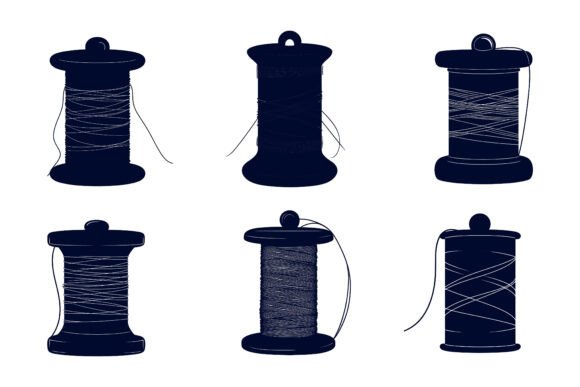
Set of Sewing Threads: A Detailed Look at Vector Illustration Collections for Your Creative Toolkit
If you create visual content for sewing blogs, craft supply packaging, e‑learning materials, or social media graphics, you have likely searched for a reliable way to represent threads, needles, and stitching. One resource that keeps surfacing is a carefully curated Set of Sewing Threads in a vector illustration format. These are not photographs of physical spools, but meticulously drawn graphic assets built in Adobe Illustrator and saved as AI, EPS, and JPG files. They offer something that a quick snapshot or a generic icon library rarely does: precision, adaptability, and a hand‑crafted look that can be tailored to your brand.
This article walks through what a Set of Sewing Threads vector collection actually includes, how it compares with other visual approaches, and when it makes sense to add it to your resource library. The goal is not to sell you on any single product but to help you evaluate whether this type of asset matches your workflow and project demands.
What Exactly Is a Set of Sewing Threads in a Vector Illustration Collection?
At its core, a Set of Sewing Threads is a downloadable bundle of graphic files that depict elements related to sewing thread: spools in different shapes, thread strands, bobbins, cones, and sometimes accompanying objects like pins or scissors. The defining characteristic is that the primary files are in AI (Adobe Illustrator) and EPS (Encapsulated PostScript) formats, meaning they are resolution‑independent vector graphics. A JPEG preview or thumbnails are usually included, but the real value lies in the editable vector files.
These collections are designed with a consistent visual style—colors, line weights, shading, and proportions all match. The layer structure inside the AI file is often organized logically: each spool or element sits on its own named layer or sublayer, making it simple to isolate, duplicate, or rearrange objects. Because the artwork is vector‑based, you can scale a single thread icon to the size of a billboard or shrink it for a mobile app icon without losing crispness.
How a Vector Thread Set Compares to Other Visual Resources
Understanding the landscape of available graphics helps clarify where a dedicated Set of Sewing Threads fits. Most alternatives fall into a few broad categories, each with its own strengths and compromises.
Raster Clipart and Stock Photos
Photographs of real thread spools can look authentic, but they come with fixed lighting, backgrounds, and limited resolution. If you need to change the color of a spool to match your palette, you are stuck with complex photo editing or reshooting. Raster clipart (PNG, JPG) often suffers from pixelation when enlarged and rarely offers the same fine‑detail control. In contrast, the Set of Sewing Threads is built for on‑the‑fly color adjustments and scaling.
Free Icon Libraries
There are plenty of free sewing icons online, often in SVG format. While convenient, they tend to have a generic, ultra‑minimalist style that may not align with a cohesive brand identity. Consistency across a set is also hit‑or‑miss: thread spool icons might come from different designers, creating a visual hodgepodge. A premium illustration set done by a single artist ensures that every element—from the wood texture on a spool to the subtle highlights on the thread—shares the same attention to detail.
Hand‑Drawn or Watercolor Style Sets
Some artists sell hand‑painted thread illustrations digitized as transparent PNGs. These carry a charming, organic feel but often lack the ability to strip out a background or break apart layers. Once again, vector AI/EPS collections give you maximum editability. You can remove a shadow, swap out the thread wrap color, or even deconstruct the spool into its base shapes—something raster formats simply cannot support.
Strengths That Set This Type of Collection Apart
When you examine what a well‑crafted Set of Sewing Threads actually delivers, several practical advantages emerge that go beyond the obvious “it’s vector” tagline.
- Cross‑platform compatibility: The files are packaged for both Mac and Windows users. AI and EPS can be opened in a range of software beyond Adobe’s ecosystem, including Affinity Designer, CorelDRAW, and free tools like Inkscape. That flexibility matters if you collaborate with clients or team members on different operating systems.
- Neatly organized structure: A clean file with sensible layer naming (e.g., “Thread Cone – Red,” “Spool – Wood Base”) cuts hours from project setup. Instead of hunting through dozens of unnamed layers, you can immediately locate what you need and turn visibility on or off.
- Detail and consistency: High‑quality thread sets invest time in small nuances—the texture of a thread wrap, the subtle reflection on a plastic bobbin, the accurate proportions of a serger cone. When you use multiple elements together in a pattern or infographic, that consistency prevents a disjointed look.
- Multi‑purpose output: These illustrations are suitable for print (brochures, sewing pattern covers, labels), web (blog banners, online course materials, e‑commerce product pages), symbols (icon fonts, app interfaces), and infographics (step‑by‑step sewing tutorials). Having one resource that works across all those contexts reduces the need to license multiple asset packs.
Practical Use Cases Where a Vector Thread Set Shines
Not every project demands a specialized illustration set like this. But there are scenarios where it becomes a clear productivity booster and creative enabler.
Imagine you run a domestic sewing machine blog and publish weekly tutorials. Each post needs a featured image showing the tools used. Instead of staging and photographing real thread each time, you can drag a spool from the vector set, adjust its color to match the thread you’re demonstrating, and maintain a consistent visual theme across every post. When you later decide to update your blog’s color scheme, you don’t have to reshoot anything; you simply tweak the global colors in the AI file.
For small business owners who sell hand‑dyed threads, labels and packaging inserts need to look professional. A Set of Sewing Threads that includes cone and spool variations can be adapted quickly for different product lines. Because the files work for both print and web, the same graphic can appear on a physical hangtag and on the online store’s product thumbnail, creating a unified customer experience.
Designers building infographics for a sewing skills guide can combine thread icons with numbered steps and arrows. The vector format guarantees that text wrapped around a spool icon stays legible at any size. And if the client wants to change the infographic’s accent color shortly before a deadline, the edit takes minutes rather than a complete redesign.
When a Set of Sewing Threads May Not Be the Right Fit
No resource works for every need. Being aware of the limitations helps you decide without regrets. First, if your brand relies on the photographic realism of actual yarn or thread—say, you sell luxury silk threads and need extreme close‑ups showing texture—a vector illustration may feel too artificial, no matter how detailed. In that case, high‑resolution macro photography is irreplaceable.
Second, if you only need a single simple thread icon once, investing in a comprehensive set might be overkill. A quick SVG download from a reputable icon site would suffice. The Set of Sewing Threads is most economical when you plan to use multiple elements across several projects, or when you value the ability to deeply customize each illustration.
Third, while AI and EPS are industry‑standard, not every user has the software or skills to edit vector files effectively. If your team mostly works in Canva or simple image editors and never touches Illustrator, the editable potential may go unused. However, the included high‑resolution JPG files can still be used as raster elements, so some flexibility remains.
Key Decision Factors to Consider Before Choosing
As you compare different sets—whether they are specifically called a Set of Sewing Threads or fall under broader “sewing clipart” categories—keep these points in mind to match the right collection to your situation.
- File Format Spectrum: Look beyond just AI and EPS. Check if the set includes JPGs or transparent PNGs for quick drag‑and‑drop use. A good balance covers both advanced editing and instant deployment.
- Artistic Style: Does the set lean toward a vintage wood‑spool look, a modern flat‑design aesthetic, or a realistic shaded approach? Consistency of style within the set matters, but so does alignment with your existing branding. Some sets offer a single cohesive look, while others cram many mismatched elements together—something to scrutinize in the previews.
- Editability and Layer Behavior: Not all vector files are created equal. A well‑organized set lets you select a thread path and change its color without affecting the rest of the spool. Others might have everything merged into one complex compound shape, making partial edits frustrating. Look for mentions of “neatly organized layers” or “isolated elements” in the description.
- Licensing Terms: Some collections are for personal use only, while others allow commercial projects, print‑on‑demand, or reselling of modified graphics. Clarify the license before buying so you don’t face limitations later.
- Platform Neutrality: Since you may switch between Mac and Windows or share files with collaborators on different systems, the promise of “designed for Mac and Windows users” isn’t just marketing. It ensures font outlines are embedded and no platform‑specific features cause glitches.
How a Vector Thread Collection Saves Time in a Typical Workflow
Consider a realistic timeline. You need a series of social media posts promoting a sewing workshop. Without a dedicated Set of Sewing Threads, you might spend an hour searching through stock sites, finding thread images that match the workshop’s color theme, and then still have to cut out backgrounds or settle for illustrations with conflicting styles. With a unified set, you pick the relevant spool or cone, apply your brand’s colors directly in Illustrator, and export the assets in about 15 minutes. Over a year of regular content creation, that time differential adds up measurably.
The ability to repurpose is another subtle benefit. You create a thread‑themed pattern for a website background today, a set of printable thank‑you cards tomorrow, and an infographic next month—all from the same original source. Because you can modify and reuse the assets infinitely, the per‑project cost shrinks, and visual consistency grows.
Realistic Example: Boutique Fabric Store Promotional Materials
Let’s say you manage a small fabric store and want to design a trifold brochure that teaches beginners how to match thread to fabric weight. You could hire an illustrator, but that’s costly and time‑intensive. Instead, using a Set of Sewing Threads you’ve purchased, you lay out three thread spool icons in different thicknesses inside a clean table. You color‑code them to correspond with fabric swatches you photographed. Then you add a magnified thread strand illustration from the same set to show ply differences. Because the file is vector, you can stretch the strand to fit the column width without any softening. The brochure goes to print with a professional, educational feel, and the cost stays within a modest marketing budget.
If later you decide to turn the brochure content into an Instagram carousel, you extract the same icons, resize them for the square format, and export them as 1080px JPGs directly. No renegotiating licenses, no inconsistent styles. That end‑to‑end utility is where a well‑built vector set delivers practical value.
Caring for Your Digital Assets After Purchase
Once you acquire a Set of Sewing Threads or any similar illustration collection, a little organization on your end keeps it accessible. Create a master folder named “Sewing Vector Assets” with subfolders for AI working files, exported PNGs, and the original JPG previews. Consider duplicating the original AI file and using the copy for modifications, so you always have a pristine version to revert to. This small habit prevents accidental overwriting and saves headaches when you need to repurpose an element months later.
Making an Informed Choice
A Set of Sewing Threads vector illustration collection bridges a gap between generic icon packs and expensive custom artwork. It suits designers, craft bloggers, sewing instructors, and small product creators who need flexible, polished thread visuals without navigating complex rights or inconsistency. Yet it is not a one‑size‑fits‑all answer. Your project’s specific needs—realism level, editing capability, budget, and style—should drive the final call.
Take time to review preview images carefully. Zoom in on the details. Check that the threads look like threads, not just coil shapes. Verify that the included file formats match the software you use daily. If those boxes check out, and you can envision using multiple elements across your upcoming work, then such a set likely justifies its place in your asset library.
Ultimately, the right resource removes friction. When you can reach for a consistent, editable thread illustration instead of starting from scratch or wrestling with a poor‑quality graphic, you free yourself to spend more time on what you do best: creating compelling content, designing beautiful products, or teaching a skill you love.